

Out of Pocket, Out of Touch
Nashville residents are hurting. Regular families and local business owners, from small mom and pop shops to major Broadway establishments, have been crushed by recent property tax increases. While Mayor Freddie O’Connell claimed the property tax increase was needed to fund essential services like schools and public safety, it seems those extra funds are going to more than what the vast majority of people would view as essential.
In the mayor’s most recent budget, he proposed–and the Council later passed–handing out $735,000 to the Tennessee Immigrant and Refugee Rights Coalition (TIRRC). The organization also has a political arm that engaged voters in elections to support O’Connell, but even without the optics of a potential kickback for their support, Nashville’s leaders should do what nearly every Nashvillian is doing: tighten their belts. When local residents are struggling, and local businesses are closing due to massive property tax hikes, the city should at least spend those funds on what serves the average Tennessean: better roads, better schools, better public safety. Financially supporting a non-profit organization that has “political advocacy” on its website doesn’t scream “helping the average Nashville resident.”
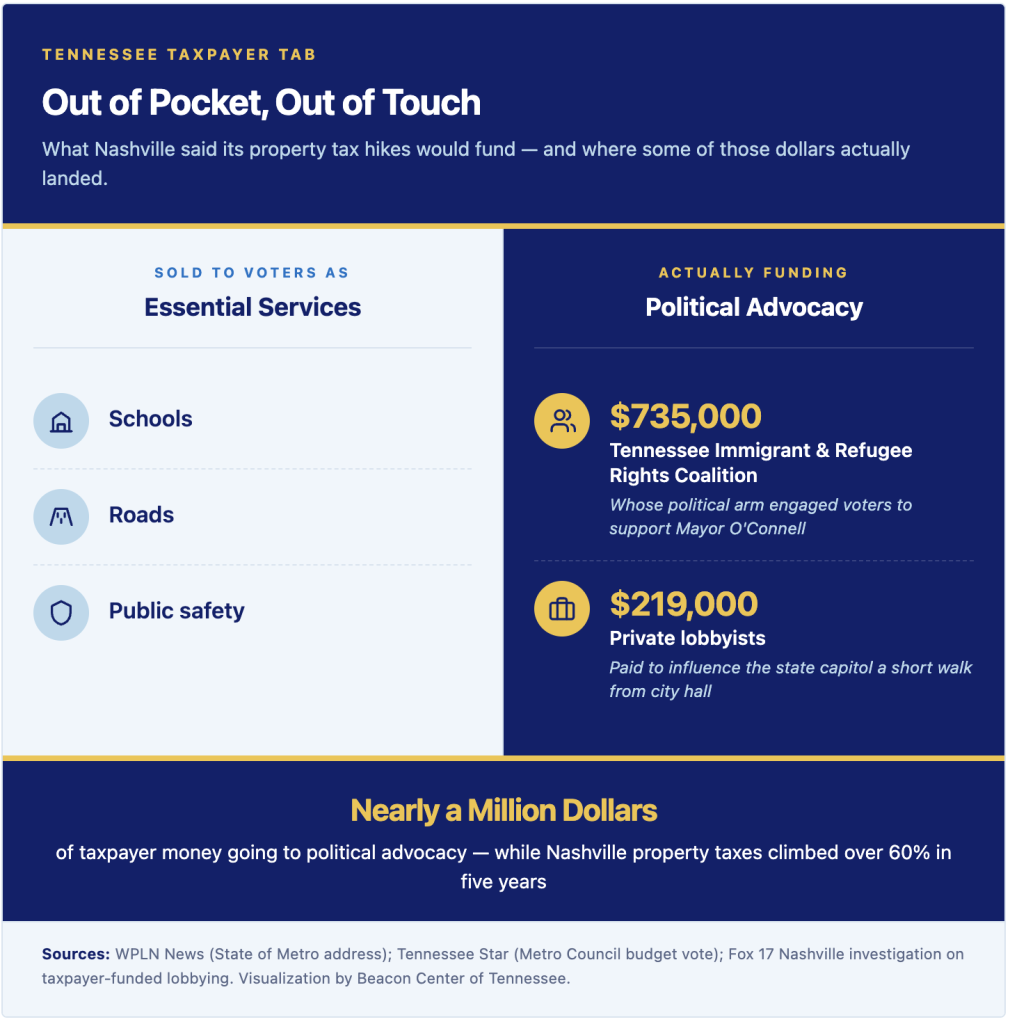
But TIRRC isn’t the only place where local tax dollars are going for political influence. Nashville, along with dozens of cities, counties, utilities, and other government organizations, pays for private lobbyists to sway the opinion of the state legislature and Congress. Your local government is taking more of your hard-earned money through higher property taxes and handing it over to private lobbyists to advocate for the government, not the taxpayers. Nashville’s city hall is just a short walk to the state capitol, yet the city still spent over $200,000 on private lobbyists in 2025. Taxpayer-funded lobbying and TIRRC handouts show how citizens are forced to finance the political advocacy agendas of the government, which may not align with their best interests, all while their cost of living continues to rise.
No one wants to pay higher property taxes, and local governments almost always fear monger by claiming that without a property tax increase, essential services like education and policing will fall apart. Yet we have seen time and time again that revenue from the increases doesn’t just go to essential services; it goes towards pet projects and advocacy efforts that are arguably against the best interests of the average resident. Nashville residents are looking at their own budgets for ways to save money, watching every dollar as tax rates have risen over 60 percent in five years, yet the city doesn’t want any of its budgeting scrutinized. Those increased tax revenues going to lobbying other governments may have some of Congress’ spending habits rubbing off on Metro.